Posts Tagged ‘videoclip’

THE CINEBOX & ITALIAN CENSORSHIP

Renato Carosone with his sextet “’O Mafiuso” (The Mafia man) (Cinebox, 1958).

“’O Mafiuso” was one of the three music videos (the other two were “Atene” and “Torero”) that Carosone made for the Cinebox in December of 1958, just before he withdrew from the music scene on the 7th of September in 1959. The films appeared on the prototype of the Cinebox that was inaugurated at the Press Club in Rome, Italy and at the exposition stands of the SIF company (The International Company of Audiovisuals) at the fair in Milan, Italy respectively April and May of 1959.
The obligatory preceding official censure announcement by the Board of Censors of the Ministry of Tourism and Entertainment was a huge hindrance to the development of the Cinebox enterprise. Censorship was the main culprit that delayed the commercialization of the Cinebox. The first No objections certifications, became effective only on the 15th of March 1961. In other words, when the Cinebox was finally allowed to go onto the market, the music video entitled “’O Mafiuso” (The Mafia man) was already three years old and the singer, Renato Carosone had already retired from the music business 18 months earlier.
Paolo Emilio Nistri, the managing director of the Ottica Meccanica Italiana (Italian Optical Mechanics) in Rome, recalls that his good friend Renato Carosone had stated that he would like to enter into a partnership of the OMI company.

THE GREAT GRAND-FATHER OF THE MV

“BOHEMIAN RHAPSODY” BY QUEEN IS NOT THE FIRST MUSIC VIDEO IN RECENT HISTORY AS WE HAVE BEEN MADE TO BELIEVE. THE VERY FIRST SHORT FOOTAGE FILM CONCEIVED TO PROMOTE SONGS WAS PRODUCED IN ITALY IN 1959 FOR THE CINEBOX WHICH WAS A REVOLUTIONARY OVERSIZED ‘VIDEO-JUKE-BOX’, THAT FOR THE FIRST TIME ALLOWED US TO LISTEN TO AND TO ACTUALLY SEE THE SINGERS OF THE SONGS.

Renato Carosone, Don Marino Barreto Junior, Peppino Di Capri and Nilla Pizzi, paved the way to the music videos of the nineteen sixties that subsequently aroused the interest and opened the doors to Italian film directors like Vito Molinari, and Enzo Trapani and up and coming new-comers such as Claude Lelouch, Francis Ford Coppola and Robert Altman. For the first time the story is narrated in the Italian Television Documentary ‘Tg2 Dossier’ that follows the thread of the new-born concept of music videos that intertwined through a background of commercial rivalry that flared up between Italy, France and the United States, and which subsequently aroused the interests of the mafia in New York and the suppression by the forceful crackdown of Robert Kennedy’s G-Men.

“The Great-grandfather of the Music Videos” by Michele Bovi, Tg2 Dossier RAI, 16th April 2006. [SUBTITLES IN ENGLISH]


INTERVIEWS AND VIDEOS THAT APPEAR IN THE PROGRAM

Interviews
– Paolo Emilio Nistri, manager Ottico Meccanica Italiana (Rome)
– Andrée Davis-Boyer, producer and film director Scopitone (Paris)
– Bob Orlowsky, lawyer and historian of the music video (San Francisco)
– Frank Rose, journalist (New York)
– Roberto Marai, entrepreneur (Salò, Brescia)
– Ermanno Caselli, technical director of Società Internazionale di Fonovisione (Milan)
– Alberto Moro, editor (Milan)
– Roby Matano, singer (Milan)
– Clem Sacco, singer (Tenerife, Canary Islands)

Videos
– Gianni Morandi e Mary Di Pietro
– Neil Sedaka
– The Queen
– The Delta Rhythm Boys
– Paul Anka
– Brigitte Bardot
– Don Marino Barreto Junior
– I Brutos
– I Divini
– Wera Nepi
– Iva Zanicchi
– Rika Zarai
– Betty Claire
– Henry Salvador
– Gastone Parigi
– Gegè Di Giacomo
– I Campioni
– Fausto Leali
– Lilli Bonato
– Edoardo Vianello
– Pino Donaggio
– Ornella Vanoni
– Nico Fidenco
– Sergio Endrigo
– Ricky Gianco
– John Foster
– Dalida
– Rita Pavone
– Gino Paoli
– Juliette Greco
– Alice e Ellen Kessler
– Peppino Di Capri e i suoi Rockers
– Marino Marini e il suo quartetto
– Adriano Celentano
– Clem Sacco
– Johnny Hallyday
– Sylvie Vartan
– Tony Renis
– Vince Taylor
– Francoise Hardy
– The Touchdown Girls of Crazy Horse
– De Giafferi
– Marian Montgomery
– Debbie Reynolds
– Joi Lansing
– Sandy Shaw
– Miguel Cordoba
– The Procol Harum
– Nancy Sinatra
– Frank Sinatra Junior
– Skin

Giorgio Gaber testimonial of the Cinebox

Giorgio Gaber testimonial of the Cinebox at the Sanremo Festival 1964.

I Divini “La Canzone del Cinebox” (Cinebox, 1962).

...

SONGS TO SEE

The italians, pioners of Music Videos

WHO MADE THE FIRST SHORT-FOOTAGE FILM SPECIFICALLY REDARDING A SONG? MARIO ALMIRANTE IN 1930 FOR ‘NINNA NANNA DELLE DODICI MAMME’ (THE LULLABYE OF TWELVE MOTHERS) BY ODOARDO SPADARO. WHO ACTUALLY FILMED THE FIRST SHORT FOOTAGE PROMOTIONAL COLOR FILM? DOMENICO PAOLELLA FOR ALTAGRACIA’ BY DON MARINO BARRETO JUNIOR, A MUSIC VIDEO MADE FOR THE CINEBOX WHICH WAS A JUKE-BOX WITH A SCREEN FOR PROJECTING VIDEOS INVENTED IN ITALY AND PRESENTED TO THE PUBLIC IN APRIL 1959 BY VITTORIO DE SICA. WHO WAS THE AUTHOR OF THE FIRST NEW GENERATION MUSIC VIDEO? RUGGERO MITI WHO IMMORTALIZED LUCIO BATTISTI IN THE WOODS OF THE BRIANZA, A DISTRICT IN ITALY SINGING THE SONG ‘ANCORA TU’ (YOU AGAIN). WHO WAS THE FIRST TO FILM AN ENTIRE ALBUM OF SONGS? POMPEO DE ANGELIS IN 1973 WITH ‘GIRA CHE TI RIGIRA AMORE BELLO’ (TURN AND BE TURNED MY HANDSOME LOVE) DI CLAUDIO BAGLIONI.

A televised documentary that researched and documented the firstborn of the various music videos, was Tg2 Dossier entitled ‘Generazione De Sica, canzoni da guardare’ (The De Sica generation, songs to see)) by Michele Bovi. It was a journey through a century of popular light hearted melodic or light-music films often with popular singers, as the main protagonist. only to find that many prestigious names of the world of culture and cinema had worked in this genre of ‘Musicarelli’ films (popular light hearted melodic or light-music films often with popular singers, as main protagonist). from Ettore Scola to Nanni Loy, from Ennio Flaiano to Antonio Ghirelli, from Ugo Pirro to Cesare Zavattini. With testimonials of Italian and International artists and film directors plus an interview with Francis Ford Coppola who, when young, was involved in the production of the Scopitone, the French competitor of the Italian Cinebox: in this venture the future director of ‘The Godfather’ lost quite a large sum of money.

“The De Sica Generation: Songs to See” by Michele Bovi, Tg2 Dossier RAI, 9 March 2008. [SUBTITLES IN ENGLISH]


INTERVIEWS AND VIDEOS THAT APPEAR IN THE PROGRAM

Interviews
– Vito Molinari, film director (Milan)
– Piero Pompili, producer and film director (Milan)
– Andrée Davis-Boyer, producer and film director (Paris)
– Francis Ford Coppola, film director (New York)
– Ruggero Miti, film director (Rome)
– Pompeo De Angelis, film director (Rome)
– Bob Orlowsky, lawyer and historian of the music video (San Francisco)
– Edoardo Vianello, singer (Rome)
– Clem Sacco, singer (Tenerife, Canary Islands)
– Fausto Leali, singer (Milan)
– Roberto Marai, entrepreneur (Salò, Brescia)
– Massimo Celeghin, collector (Jesolo, Venice)

Videos
– Vittorio De Sica
– Bessie Smith
– Odoardo Spadaro
– Adriano Celentano con Don Backy, Guidone, Ricky Gianco, Miki Del Prete
– Domenico Paolella
– Silvana Pampanini
– Don Marino Barreto Junior
– Gino Paoli
– Milva
– Giorgio Gaber
– Enzo Jannacci
– Remo Germani
– Gianni Pucci
– Gegè Di Giacomo e il suo complesso
– Antonio Basurto
– Ricky Gianco
– Gino Corcelli
– Adriano Celentano
– Babette
– Germana Caroli
– Sergio Endrigo
– Bobby Rydell
– Neil Sedaka
– Dalida
– Miguel Cordoba
– Line Renaud
– Alice e Ellen Kessler
– Johnny Hallyday
– I Brutos
– Richard Anthony
– The Back Porch Majority
– Dominique & Georges Jouvin
– Los Marcellos Ferial
– The Queen
– Lucio Battisti
– Claudio Baglioni
– Robertina e Gattociliegia
– I Nobili
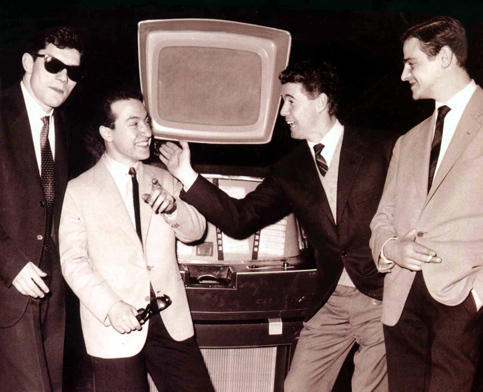
Luigi Tenco, Ricky Gianco, Joe Sentieri, Sergio Endrigo and Cinebox

Four artists that appeared in the music videos of the Cinebox. From left to right: Luigi Tenco, Ricky Gianco, Joe Sentieri, Sergio Endrigo (Milan. Italy 1962).
...

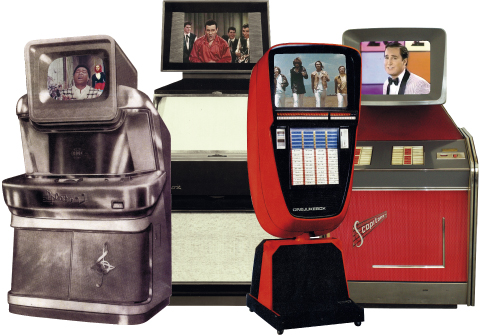
Some Cinebox models. artwork©InesPaolucci

THE AMERICANS IN THE CINEBOX

Frankie Avalon testimonial del Cinebox al Festival di Sanremo del 1964

Frankie Avalon testimonial of the Cinebox at the Sanremo Festival 1964.

Frankie Avalon with the dancer Marisa Ancelli, “Tornerai” (Cinebox, 1962). [From the collection of Andrea Ambrosini].

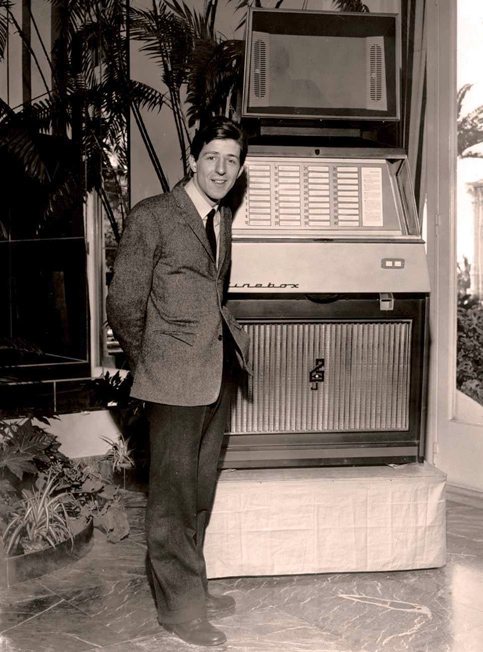
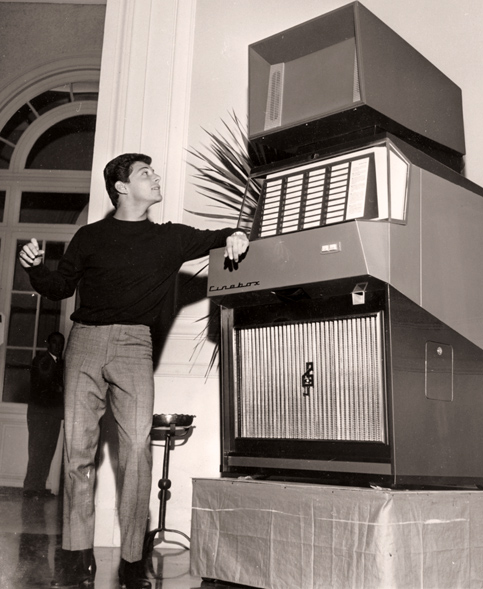
Between 1962 and 1964, SIF had completely renewed its film repertoire, offering opportunities to the new heartthrobs of the younger generation such as American popstars like Paul Anka, Neil Sedaka, Frankie Avalon and Bobby Rydell who were asked to sing in Italian, which was very fashionable at the time.

Paul Anka “Ogni volta” (Cinebox, 1964).
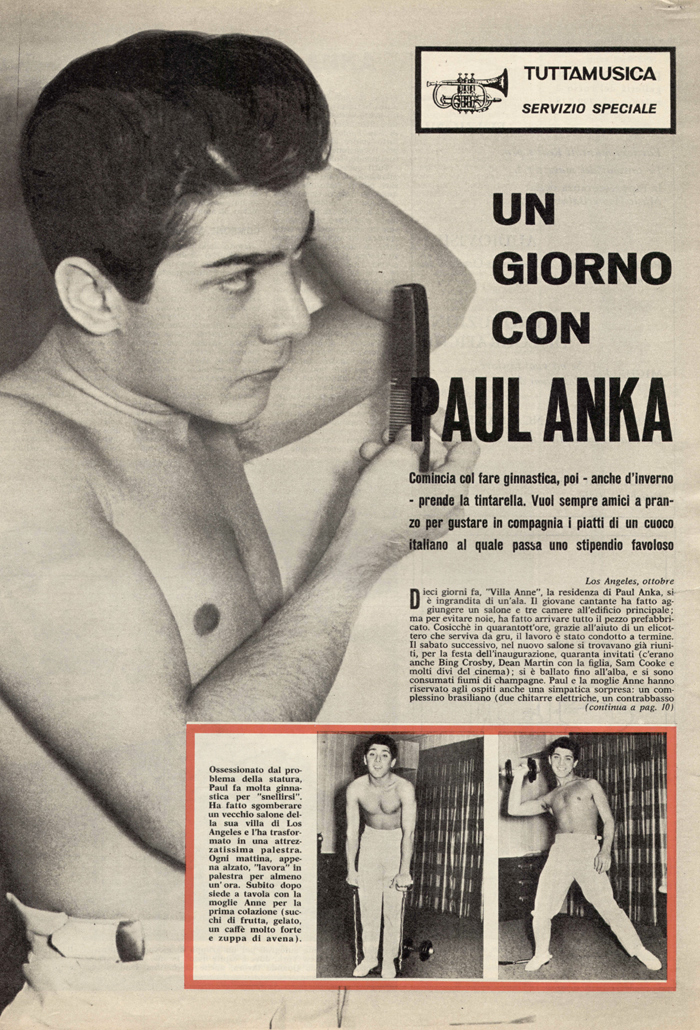
Paul Anka Tuttamusica

Paul Anka.

Paul Anka “Estate senza te” (Cinebox, 1964). [From the collection of Andrea Ambrosini].
Paul Anka “Domani prendo il primo treno” (Cinebox, 1964).

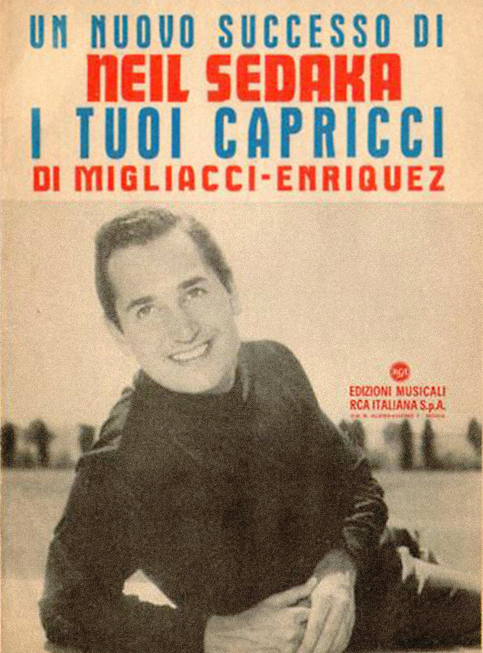
I tuoi capricci, Neil Sedaka

.

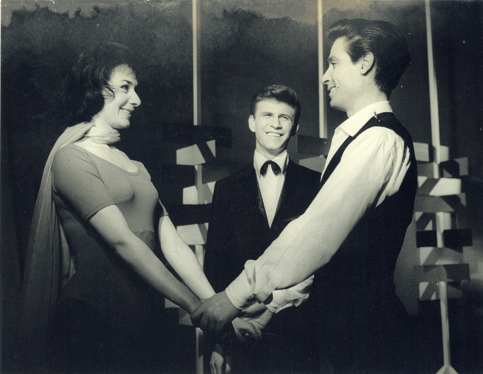
A music video created in Italian for the Italian Cinebox in 1963 entitled: “I tuoi capricci” (Look inside your heart) by Neil Sedaka with Mary Di Pietro.
Neil Sedaka Cinebox

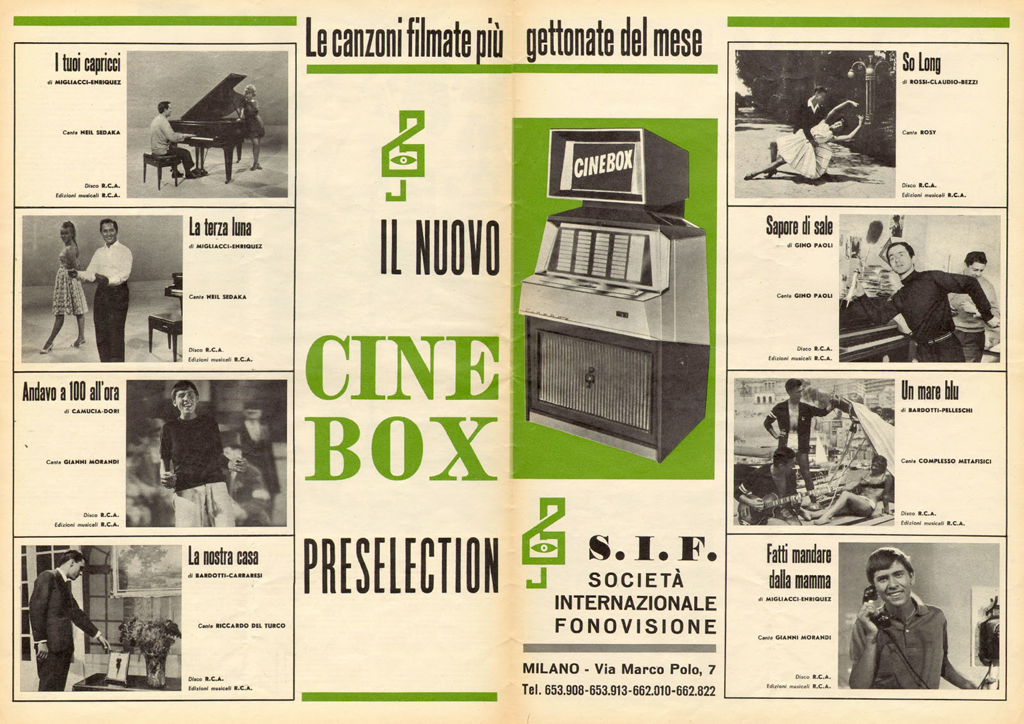
The SIF magazine.

Bobby Rydell sul set di Sway

Bobby Rydell on the set of "Sway" (Cinebox, 1963).

Bobby Rydell “Un bacio piccolissimo” (Cinebox, 1964). [From the collection of Pietro Bologna].
Il regista Vito Molinari con Bobby Rydell sul set di Sway

The director Vito Molinari (on the left) with Bobby Rydell on the set of "Sway" (Cinebox, 1963).

CINEJUKEBOX

cinejukebox

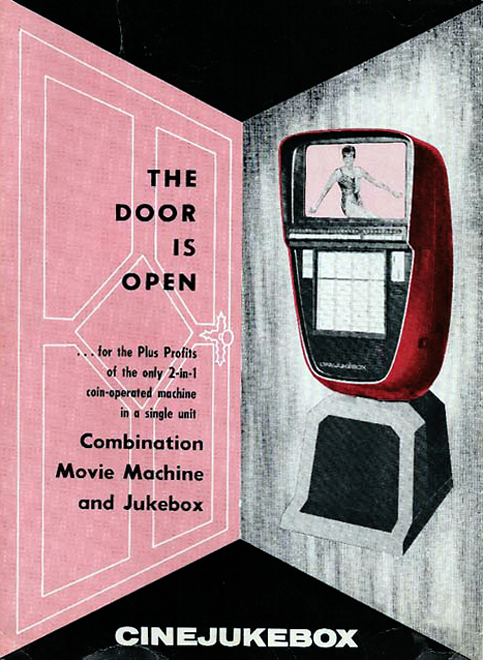
Cinejukebox model 50.

cinejukebox

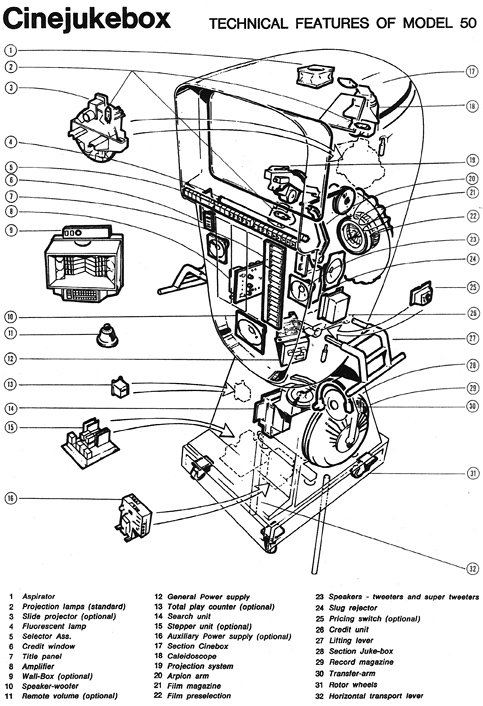
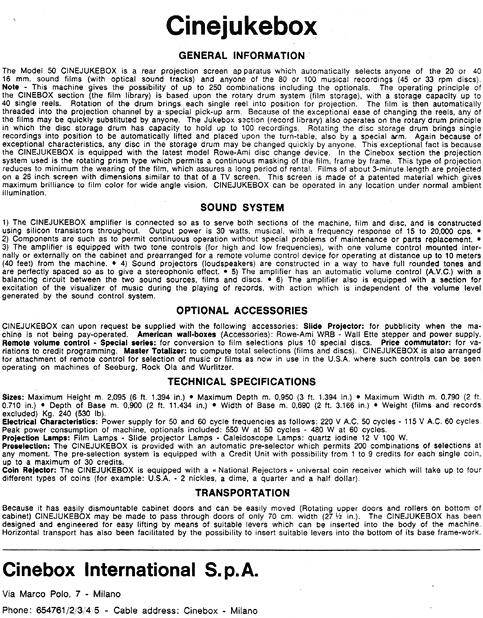
Technical features of Cinejukebox model 50.

cinejukebox

Technical features of Cinejukebox model 50.

Cinejukebox

.

Cinejukebox

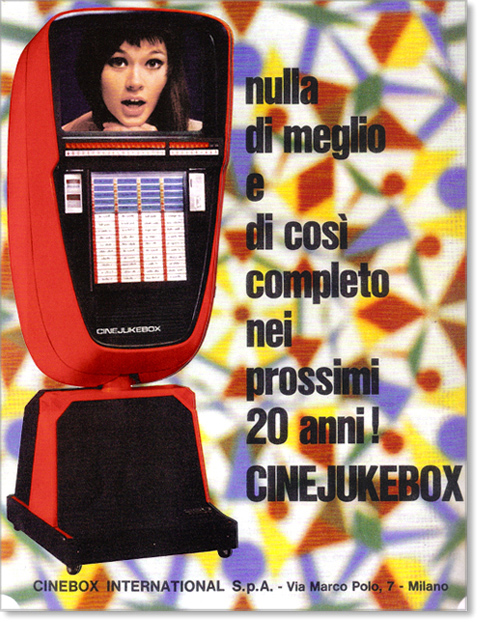
Here is the Cinejukebox, the last machine manufactured by SIF (Società Internazionale di Fonovisione – International Phonovision Society) for the American market.
Built in 1965, it was unveiled in October 1966 at the MOA (Music Operators of America) trade show in Chicago, under the slogan: “Nothing better or more complete will come along in the next 20 years!”
The production managers behind this new machine were Angelo Bottani and Giuseppe Lauro, Managing Director of Innocenti.
A masterpiece of Italian design, the Cinejukebox was manufactured by Innocenti on the production line left vacant by the Lambretta, whose patent had been sold to India. It contained 40 color 16mm films with an optical soundtrack and 200 songs selectable just like on a traditional jukebox.
The screen remained illuminated at all times: when no films were playing, the machine displayed pioneering abstract visual sequences known as “Color Dance”, in harmony with the music.
The ultra-stylish egg-shaped cabinet and video unit were designed and manufactured in Milan, while final assembly, together with the audio system supplied by the American company Rowe-Ami, took place in Philadelphia, at the facilities of David Rosen Corporation, a company specialising in the distribution of coin-operated machines (video games and jukeboxes) to casinos throughout California.
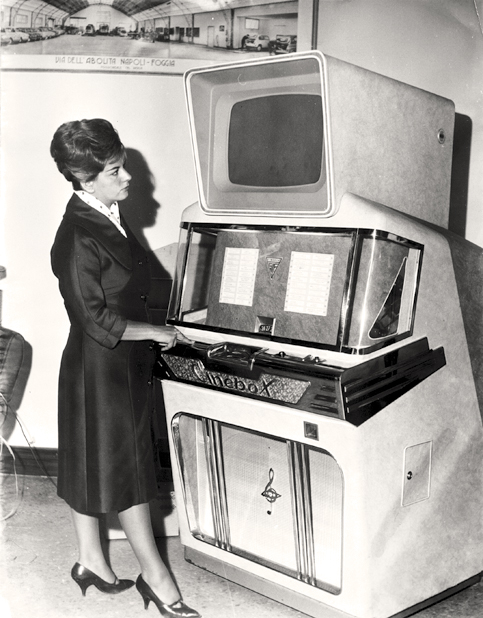
The films originally produced for the previous model – the Cinebox, first developed in 1959 at the laboratories of Ottico Meccanica Italiana in Rome and marketed by Milan-based SIF – featured Italian chart hits performed by some of the country’s most popular artists, from Mina to Gianni Morandi. They also included international pop stars such as Paul Anka, Neil Sedaka and Bobby Rydell, who even performed songs in Italian.
For the Cinejukebox, new films were added featuring British groups idolised by young audiences, such as the Beatles and Procol Harum, as well as American bands including the Monkees and the Young Rascals. However, this selection failed to capture the American market, which was the Cinejukebox’s primary target.
The industrial production plan, entrusted to engineer Sandro Colombo – who two years later would join Ferrari in Maranello – called for 5,000 units to be manufactured within one year.
Innocenti halted production after just 100 units, following a warning from its American partner Rosen that the machine was failing to generate the expected interest, largely due to the limited availability of films.
The 100 units manufactured by Innocenti were returned to a warehouse in Pennsylvania, where they remained unused until the autumn of 1983, when a fire at the North Broad Street premises in Philadelphia reduced them, along with everything else at the David Rosen facilities, to ashes.
Today, only one Cinejukebox is known to have survived anywhere in the world. It was purchased in the 1980s by Fausto Casi, an antiques dealer from Arezzo, and is now housed at the Museum of Communication Media in Arezzo, Italy.
By contrast, 25 examples of its predecessor, the Cinebox 61, have survived. Manufactured by Mival in Gardone Val Trompia, it featured a wooden cabinet crafted by San Giorgio in Alessandria, based on a design by Luigi Marzolla, the master artisan who also created the portals of Alessandria Cathedral.

Johnny Charlton, former guitarist of The Rokes, the most popular British group in Italy during the 1960s, introduces us to the Cinejukebox.

[Courtesy of Fausto Casi, director of The Museum of communication devices in Arezzo, Italy].

UN-PUBLISHED SONGS ON THE CINEBOX

The Cinebox played music videos of un-released original songs that were cut only as demo records that never went to press and were never put on the market. The record companies used the Cinebox circuit as a market survey to test consumer reactions and presumably the luke-warm reception determined the shelving of the song.Below, for the very first time, I show three music videos in black and white that were produced in 1964 by the SIPEC company that was the main supplier of the films for Cinebox. The managing director of the SIPEC Company Piero Pompili was also the director of the music video.

Fausto Leali & Laura Casati

The first Music Video is entitled Mi sei piacuta subito (I liked you straightaway): sung and performed by the duo Fausto Leali with Laura Casati, both of whom were separate single artists in other music videos of the Cinebox collection. The song is lively and catchy but apparently it did not convince the record company so it was not produced or put onto the market. A long time ago Laura Casati withdrew from the world of music and lives in the town of Pavia Italy with her family. Fausto Leali had completely forgotten that he had ever recorded this song and music video. In fact he adamantly refused to acknowledge its existence and he proffered a bet upon it. As we can see below, he lost the bet!

Remo Germani

The second music video is entitled Modestamente (In all modesty): sung by Remo Germani (Milano Italy 31 May 1938-Vigevano Italy 18 October 2010). Remo Germani also had other music videos in the Cinebox collection one of which was the highly successful song Non Andare col Tamburo (Don’t go with your drum).
Just like Fausto Leali, this song and music video had completely faded from Remo Germani’s memory. There is no trace or listing of this song or music video in his official song lists.

Jerry Puyell

The third Music Video is entitled Non ho il Clan (loosely translated: I do not belong to a clan) sung by Jerry Puyell (Mario Puglielli) from Milano Italy, son of a military hero, who was a forerunner of the Italian rock singers. He was the son of an agent of the Italian Military secret service and he was one of the so called ‘Wild ravers’ who went down in the history of Italian music, known as the Clan (Adriano Celentano, Clem Sacco, Ghigo, Jack la Cayenne, Guidone). In the late fifties the Milan civil authorities and the religious order of the Ambrosiani were scandalized by their rebellious wild raving antics during a concert at the Ice Rink Palace and at the Teatro Smeralda. They were decrying and instigating ‘Rebel Music’ as an offshoot of what was happening with Rock ‘n’ Roll in America and the rest of the world. Jerry Puyell, like Adriano Celentano, in an outrageous parody imitated in a ridiculously comical springy, shaking manner Jerry Lewis and Elvis Presley and he could seem to be the twin brother of Celentano who in Italian is appropriately nicknamed “The springer” (Il molleggiato). In the end Jerry Puyell never became one of ‘The Clan’ of Celentano. Obviously, this is where the title Non ho il Clan (I do not belong to a clan) originated from. Today, Jerry Puyell lives in Madrid, Spain and runs his own business.